Customer Support
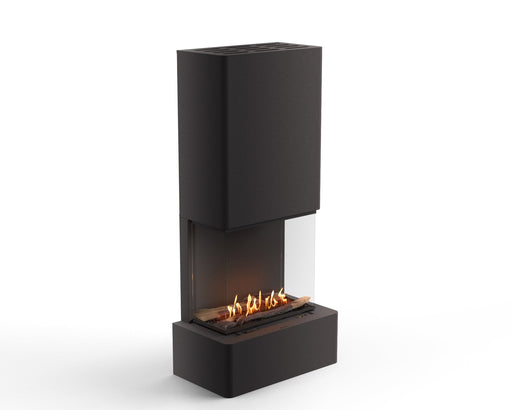
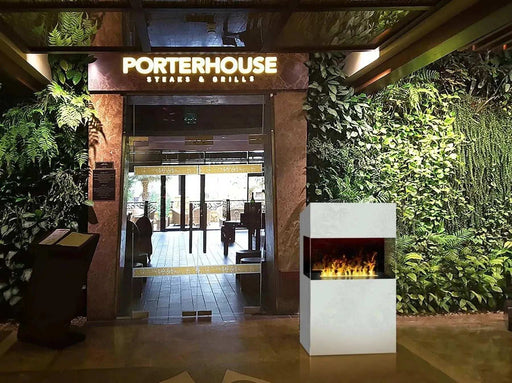
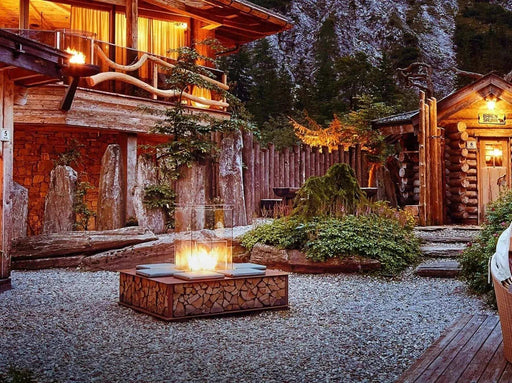
The freestanding electric fireplace is the most versatile solution among electric fireplaces: self-supporting, it requires no wall installations or niches, and can be freely positioned in any environment — from the living room to the bedroom, from a hotel lobby to a restaurant dining room.
Available in compact residential versions and exclusive design pieces for contract and hospitality spaces. No chimney, no building permits, no maintenance. Free consultation to find the right model for your project.
Description Dimplex Mapleton 100 – Cast Iron Electric Stove with 3-Sided View The Dimplex Mapleton 100 is a freestanding cast iron electric stove w...
View full detailsDescription Dimplex Belgravia – Electric Stove with Opti-V® Flame Technology Enjoy the warm, cozy ambiance of a real fire – without any of the hass...
View full detailsDescription Planika Optimyst® Electric Fireplace, Steamy Model Features: Elegant Design: With its matte black galvanized steel body, this c...
View full detailsDescription Planika Aura - freestanding electric fireplace with water vapor flame Overview: Aura is a fireplace equipped with advanced water mist t...
View full detailsDescription Planika Misty - electric water vapor fireplace Features: Elegant Design: Misty incorporates Planika's product codes with an ele...
View full detailsDescription The plug & play electric fireplace for an unprecedented fire and light experience With the E-Series electric fireplace, you can exp...
View full detailsDescription The plug & play electric fireplace for an unprecedented fire and light experience With the E-Series electric fireplace, you can exp...
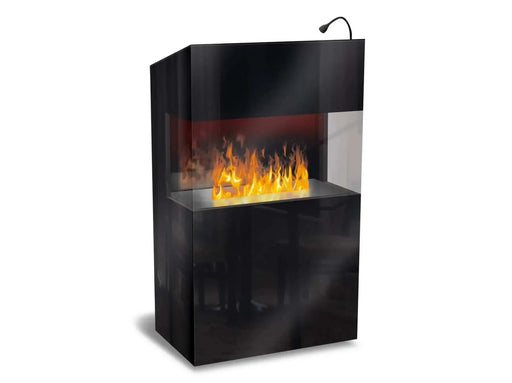
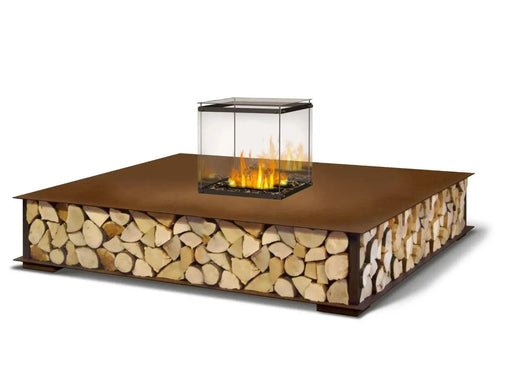
View full detailsDescription Welcome is an effective 180° view reception table perfect for restaurants, hotels, events, and receptions. It only requires electricity...
View full detailsDescription Bench is the perfect piece of furniture for those who want to create a cozy atmosphere in a simple way. With integrated effect fires, y...
View full detailsDescription Bench is the perfect furnishing accessory for those who want to create a welcoming environment simply. With the built-in effect fires,...
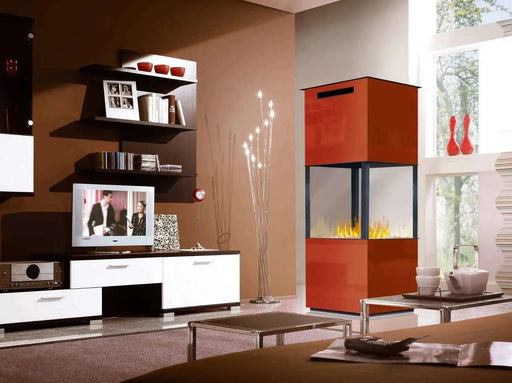
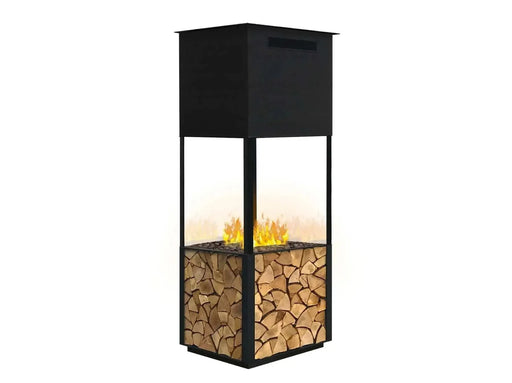
View full detailsDescription Tower is a unique piece of furniture that features integrated flame-effect fires in a sparkling steel look with real wood or black glas...
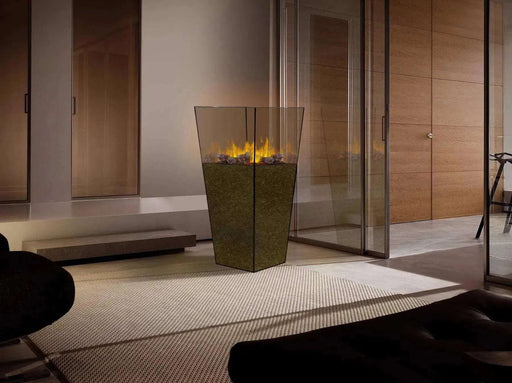
View full detailsDescriptionVase is an extraordinary and innovative product, suitable for adding warmth and ambiance to any space. It’s an impressive fire, a real e...
View full details
Unlike built-in or wall-mounted models, freestanding electric fireplaces require no installation: they are not fixed to the wall, not integrated into a niche, and require no masonry work of any kind. You simply place it, plug it in, and it works. This simplicity makes it the ideal choice for those who want a fireplace immediately – without waiting for work, without coordinating technicians, without modifying their apartment.
It is also the most flexible solution over time: it can be easily moved from one room to another, taken with you when moving, and repositioned whenever you redecorate.
The market for electric floor-standing fireplaces is clearly divided into two aesthetic trends, both represented in our selection.

The classic style floor-standing fireplace evokes the aesthetic of a traditional English hearth: lacquered or veneered wood body, flame visible through a front grate, pedestal with decorative details. Models such as the Dimplex Belgravia — with its 3D flame effect — and the Dimplex Mapleton — with water vapor technology — bring a top-tier visual quality to a classic and timeless aesthetic. A rare combination: the charm of a traditional English hearth with the most advanced flame technology available today.

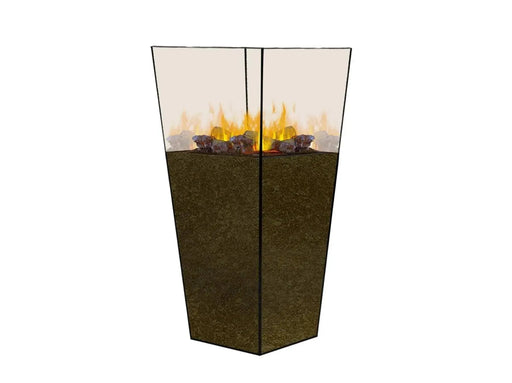
The contemporary free-standing fireplace, on the other hand, is a sculptural object: geometric shapes, materials such as glass, steel, and resin, and a three-dimensional water vapor flame visible 360° or on multiple sides. Models like the Planika Aura or those from The Flame are designed for open-plan spaces and high-end contract interiors. They are not merely heating appliances — they are furnishing elements that create a visual presence in the room.
Many high-end floor-standing electric fireplaces use water vapor technology, and this is no coincidence. This technology produces a three-dimensional, soft, and deep flame, visible from multiple angles simultaneously — a particularly valuable quality in models located in the center of a room or viewed from various perspectives.
The operation is simple: an ultrasonic nebulizer converts water into cold vapor, which is then illuminated by colored LEDs. The result is a three-dimensional flame virtually indistinguishable from a real one, with no residual heat on the glass and no risk of burns — making these models safe even in the presence of children and pets.
Installing a freestanding fireplace comes down to three steps:
No technicians, no flue, no permits — just a 220V outlet. Models with water vapor technology also require a water tank to be refilled periodically — a simple operation, similar to that of a humidifier.
The heating function, where present, is completely independent of the flame effect. You can use only the visual fire for ambiance, only the heating, or both simultaneously. High-end models feature a digital thermostat, timer, and remote or app control.
Classic living rooms and traditional settings – English-style models with wooden bodies blend perfectly into interiors with antique furniture, parquet floors, and wallpapers. They create a warm focal point without disrupting the existing aesthetic.
Open-plan and contemporary settings – Sculptural design models, often with flames visible from multiple sides, become the visual centerpiece of the room. In an open-plan kitchen-living room, a freestanding fireplace in the center or a corner defines areas without physical dividers.
Rental apartments – No structural modifications, no constraints. The freestanding fireplace is the only type of hearth that you can literally take with you when you move.
Offices and representative spaces – Contemporary design models create a welcoming atmosphere that is difficult to achieve with other furnishing elements, without requiring any modifications to the property.
The freestanding fireplace is self-supporting and requires no fixings: it can be placed anywhere and moved freely. The wall-mounted version attaches to the wall like a television and has a thinner profile. The choice depends on the decor and the amount of wall space available.
It depends on the model. Models with a heating function integrate a 1,000–2,000 W heater, suitable for rooms up to 25–30 m². Purely decorative models—such as some water vapor designs—do not produce heat but offer an exceptional flame effect.
Water consumption is very low — generally between 100 and 300 ml per hour, depending on flame intensity. A 2-liter tank typically provides 8–12 hours of continuous operation.
Yes. Freestanding electric fireplaces do not produce real flames, do not emit gases, and the front glass remains cool to the touch in water vapor models. In models with heating elements, the grille may get hot—always check the specifications of the chosen model.
For LED models, a power outlet is sufficient. For water vapor models, water is also needed in the integrated tank—a very simple operation to be repeated every few hours of use.